by Amelia Clune
Often, the traces of a place outlast the people who make them.
Recently, on a drive through Webster, New Hampshire—a small town northwest of Concord, with a population of roughly two thousand—a rooftop sculpture caught my attention.
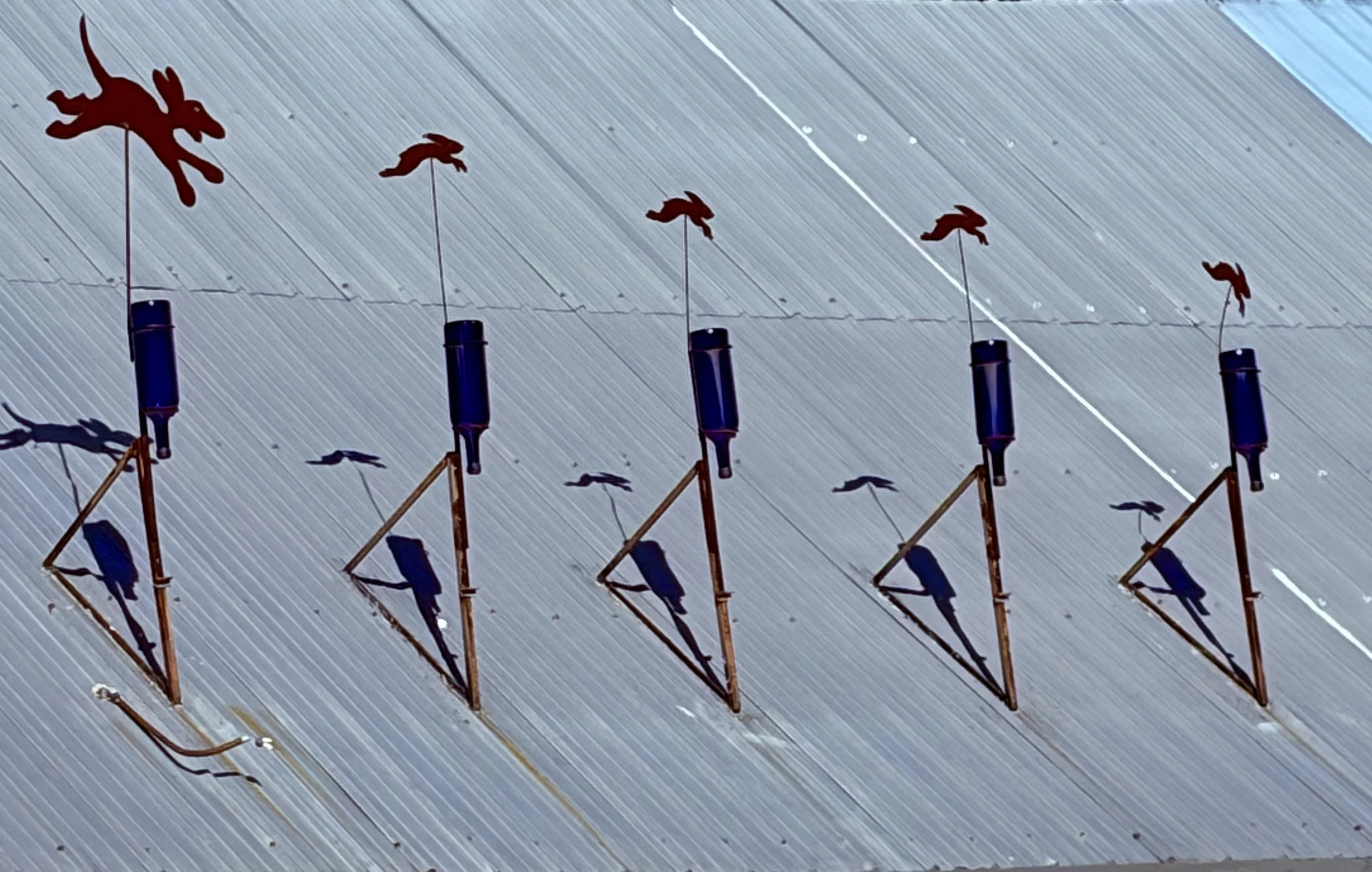
Cut from scrap metal, five rabbits are perched upon wire stems that run through cobalt-blue glass bottles. The sculpture tells a narrative: it begins with one large bunny, running full stretch, ears back, tail up, as if he has just bounded over a ridge and is descending. Next, at equally spaced intervals, are four smaller rabbits, each poised mid-leap. The whole line reads like a single animal caught in stop-motion, running over Corser Hill. The rusted metal is fixed in place, yet nothing about the sculpture feels still. The rabbits leap; their shadows shift across the shingles; the cobalt glass changes with the light.
Outside the frame are the questions of what set the rabbits in motion and where they are headed; therein lies part of their charm. While the bunnies appear intent on getting somewhere, the act of noticing them asks us to do something quite different: to slow down, pause, and look.
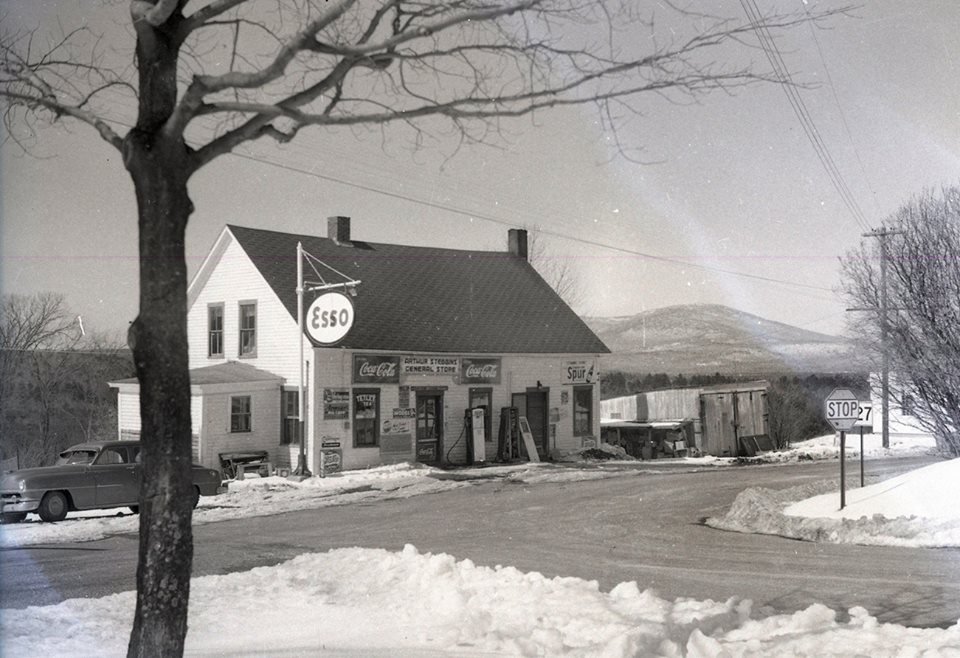
For generations, beneath the roof upon which the rabbits now run was a general store. In contrast to the swift motion of the bunnies above, it was a place where people stopped—for provisions, conversation, and community.
As early as 1791, residents of West Boscawen sought independence, citing the “Ponds, Hills & Swamps” that separated them from the meetinghouse to the east. In 1860, West Boscawen finally separated, taking the name of Daniel Webster, who had opened his first law practice in neighboring Boscawen before becoming one of the nation’s most celebrated orators and statesmen. Thirty years earlier, on the floor of the U.S. Senate, Webster had famously declared, “Liberty and Union, now and forever, one and inseparable!” Here, where geography had once made gathering difficult, community would find smaller, more ordinary forms of union.
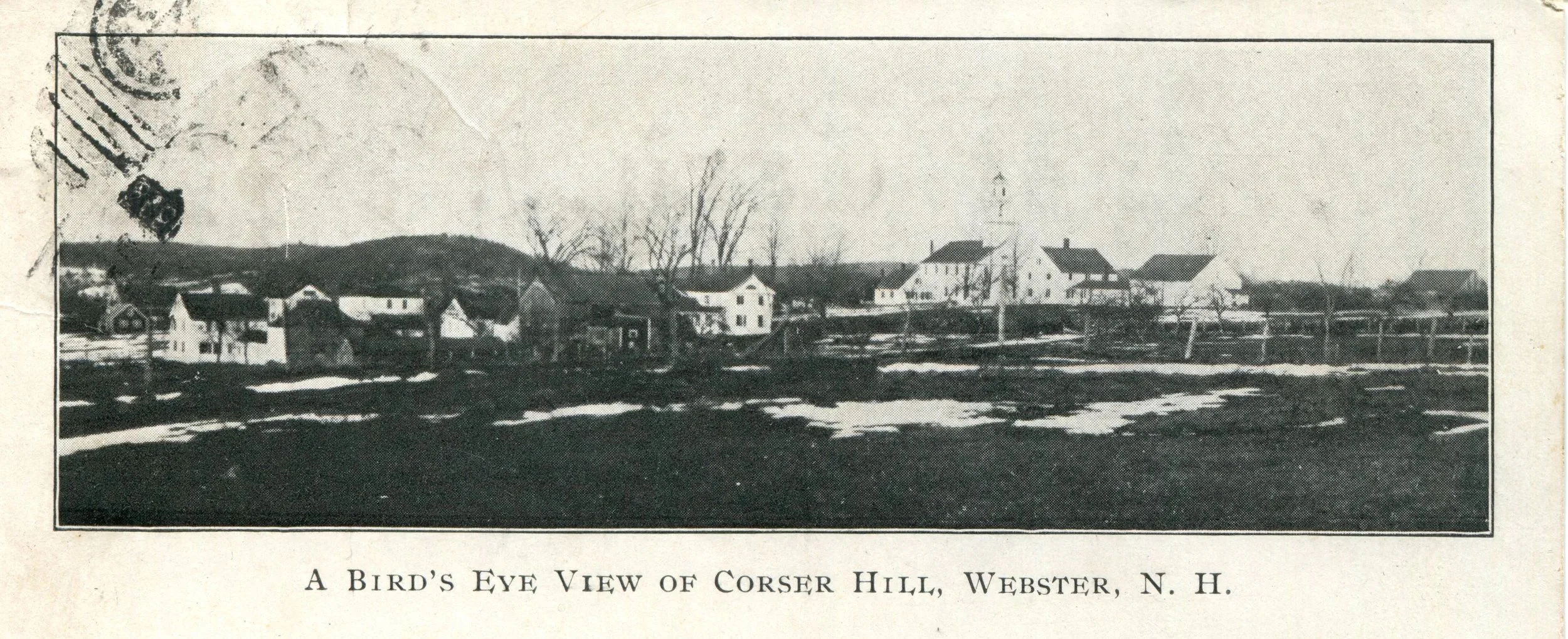
Corser Hill, part of the geographical divide separating Webster from Boscawen, takes its name from one of the area’s earliest families. In 1780, Samuel Corser built a house there with a room that doubled as a schoolhouse. A century and a half later, another kind of gathering place came to occupy the hill: a country store.
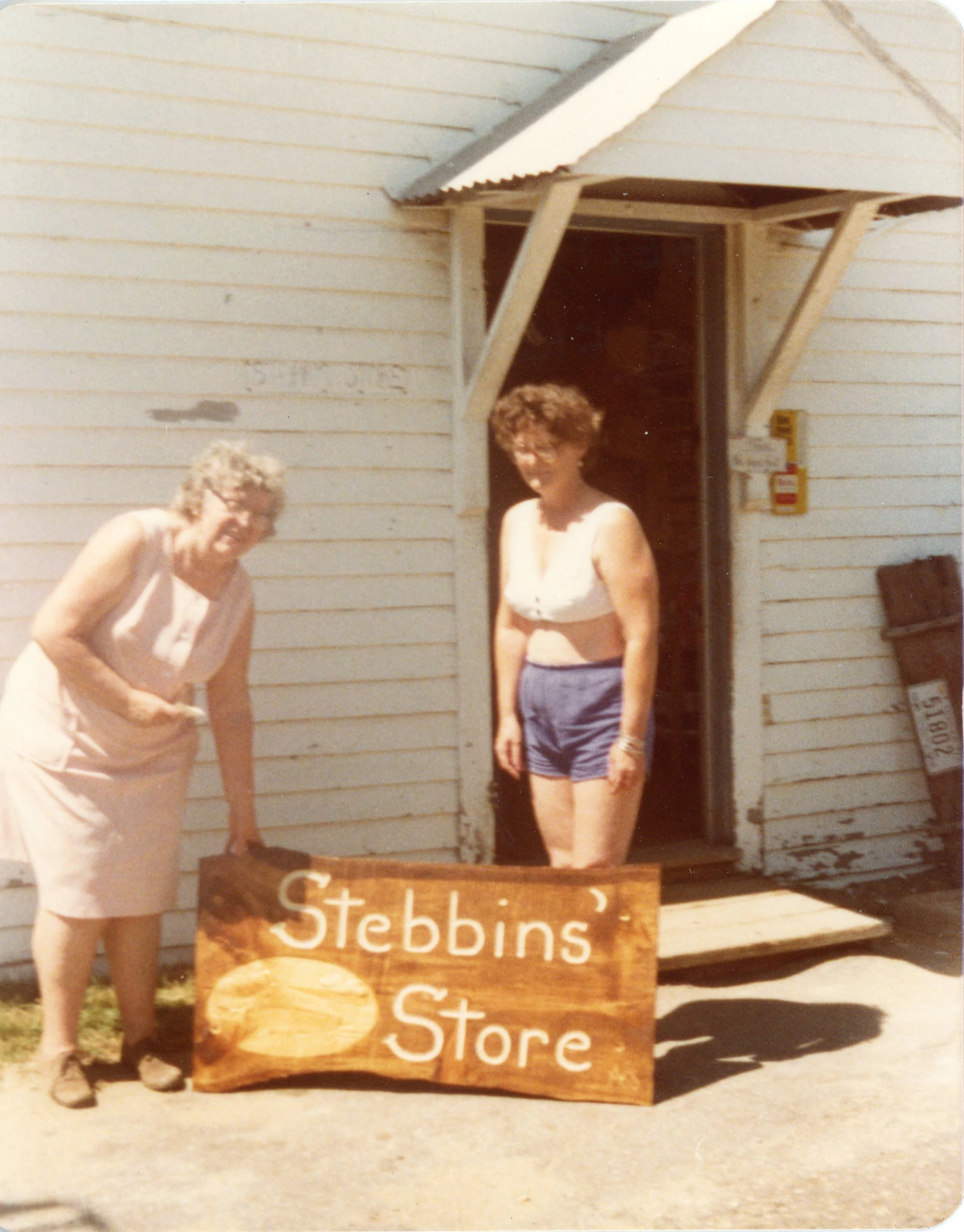
Beginning in the 1930s, Arthur and Ruth Stebbins operated Stebbins’ General Store for more than fifty years. In 1986, it became Corser Hill Country Store, closing in 1994 after an earlier closure and reopening. That autumn, Allen and Joan Smith reopened it as Cowdrey’s Country Store, painting the clapboards in the black-and-white patches of a Holstein and billing themselves as “Purveyors of Life’s Necessities.” In 2005, they sold it to Dan and Lee Tierny, who ran it until the building’s long life as a general store finally ended, and it settled into what it is now: a private home.
Across the New England landscape, motorists might reasonably expect mowed lawns, flowerbeds, and perhaps a sculpture tucked into a garden or a whimsical garden gnome.
Rooftops are another matter. They are generally the domain of chimneys, vents, antennas, and the occasional satellite dish, marooned aloft—a monochromatic relic of an earlier technology that required a concave bowl pointed skyward to capture an invisible signal. There is something both melancholic and disorienting about those dishes’ obsolescence: their posture is unchanged, still fixed toward the sky, but they can no longer capture or decipher a signal. They have lost their fluency.
In contrast, there is something audacious—and wonderfully egalitarian—about placing a sculpture on a roof. Instead of another piece of utilitarian hardware, in Webster there are five rabbits caught in flight: rusted metal threaded through cobalt-blue glass, silhouetted against the sky. They sit on a private residence, yet the pleasure of encountering them is freely shared. There is no gallery to enter, no admission fee to pay, no special knowledge required. A schoolchild on a bus, a neighbor driving home, a stranger passing through Webster—anyone who happens to look up is invited to encounter them.
I still do not know who made the rabbits, when they appeared, or what they were intended to mean. Their story led me to an old general store, to the families who kept it, to Corser Hill, and eventually to the beginnings of Webster itself. One beautiful and inexplicable rooftop sculpture made an ordinary stretch of Route 127 suddenly less ordinary.
I am grateful to whoever had the vision to put the rabbits there—and the skill and bravery to climb onto a roof and set them against the sky—and to those who have allowed them to remain. They captured my attention, and perhaps the next time you pass over Corser Hill, they will capture yours.