Arts Spotlight - Stories from the Pandemic: Machina Arts
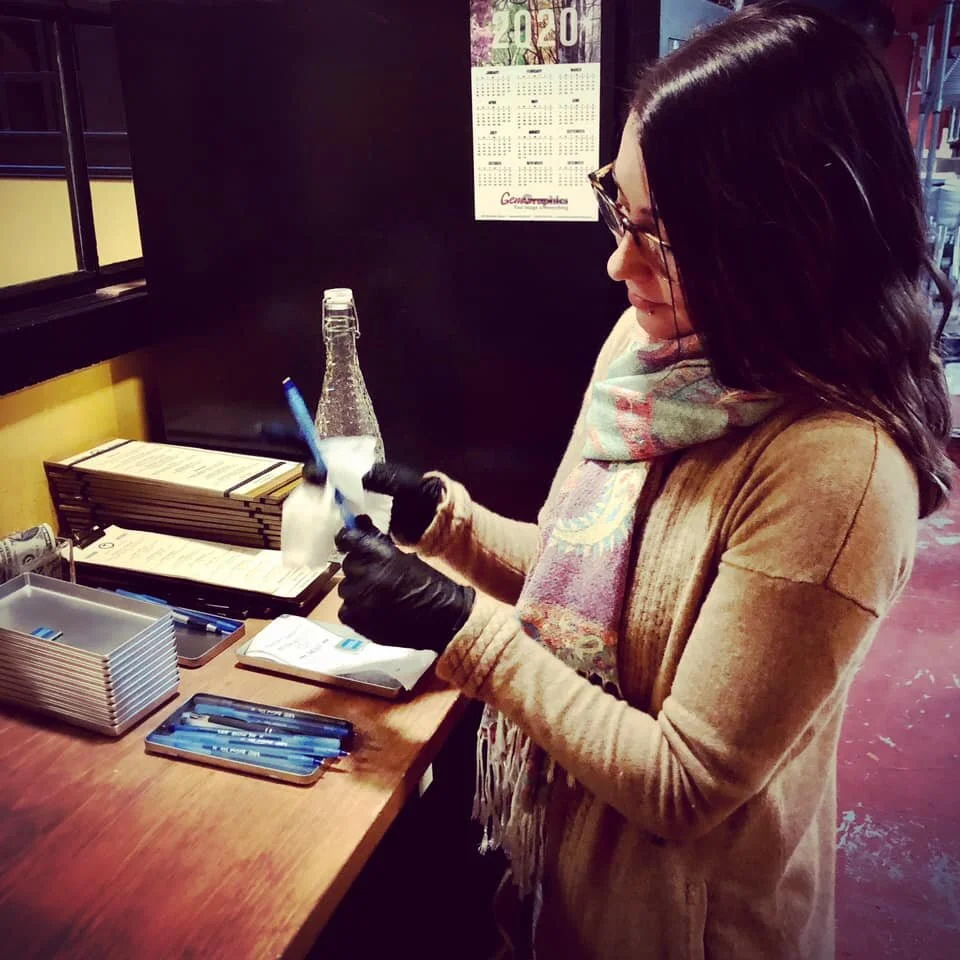
Arts Alive! collects and shares the stories of the arts community in the Monadnock region. These are unprecedented times and there are unprecedented things happening in the arts world. The coronavirus pandemic is pushing change and moving arts leaders to rethink their models of stability and connection. In this account, we hear from Danya Landis, artist and owner of Machina Arts.
Arts Spotlight - Stories from the Pandemic: Keene's League of NH Craftsmen Store
Arts Alive! collects and shares the stories of the arts community in the Monadnock region. These are unprecedented times and there are unprecedented things happening in the arts world. The coronavirus pandemic is pushing change and moving arts leaders to rethink their models of stability and connection. In this account, we hear from Taryn Fisher. In June 2019, she opened the League of New Hampshire Craftsmen store on Central Square in downtown Keene, New Hampshire. It is a fine craft gallery that sells work of member artists based in this state, and a 10 mile border zone that includes artists in Vermont, Massachusetts, and Maine. Artists rely on League of New Hampshire Craftsmen stores to provide an upscale gallery to present, market, and sell their work. Taryn shared with us the struggles and joys of operating her store and not being able to interact with her customers and artists.
How has your life changed in the last month?
My life has changed dramatically. Prior to the stay at home order, I was working at the gallery every day, interacting with customers and artists, enjoying being an integral part of our dynamic Main Street community. After the stay at home order went into effect, my life came to a screeching halt. Now, I am home almost all the time. I go to the gallery occasionally, to keep my social media campaign active, to handle the very seldom online orders that come in, and to maintain some sort of normalcy in my daily routine.
Where do you find hope and inspiration these days?

One of the adorable spring products the gallery is featuring.
The Keene and Greater Monadnock community has been tremendous. Mayor George Hansel immediately implemented weekly "town hall" webinars for the small business community. He includes city, business, and community leaders plus invited guests to these webinars. They are well-attended and very helpful. Plus, it's nice to know that there's a community out there, pulling together. In addition, several business leaders have done wonders for keeping our community alive and well. Luca Paris is a focal point - his positive energy and stamina are amazing. Ted McGreer's Virtual 5K fundraiser and Joe Toleman's Grey Tee Project, these efforts to support small business are deeply appreciated.
What is the biggest realization you've had about your work in the last month?

Artist Melinda LeBarge was featured at a “Meet the Artist” event at the gallery store in December.
I miss my gallery! I miss my artists! I miss my customers! I really enjoy my work and simply cannot wait to get back at it.
Best case scenario, how does your business emerge from "stay safe stay home?"
I am working hard to create a business and marketing strategy that adapts well to our new reality: less in-person interaction that is more carefully managed, and more virtual interaction. I'm also focusing on reducing operating costs as much as I can so that my business can survive and thrive, particularly if future sales are less than previous sales. And, I'm holding firm to NOT pursuing a "discount" or "buy one, get one free" approach. I will not let the current financial pressures put the value of the League of New Hampshire Craftsmen's brand at risk. Indeed, if I can make it to the other side of this, I'll work toward deepening our value proposition by enhancing our customers' experience and by continuing to deliver one-of-a-kind, local, hand-made artworks. Stay tuned!
UPDATE 4/27/20:
The Fine Craft Gallery located at Central Square is closing its doors. Taryn is looking for a new location for the store - either something smaller or in a more affordable location in a surrounding town - for a time when retail stores can get back to regular operations. “I am working through the sad process of getting all artworks returned to artists,” she says, “And, like everyone else, living with lots of uncertainty!”
We are here, Let us bring you joy and comfort!
A Note From the Monadnock Region Arts Community
Right now, people are turning to the arts. One obvious reason is that they have the time - the time to listen, watch, learn to make or play.
Another is that the arts bring joy and comfort.
Arts organizations are keeping doors open for folks to access the arts, continuing to support staff/employees, continuing to support art-making - all in new ways. Monadnock area arts organizations are still here - and they want to serve the community by bringing that joy and comfort and even a bit of positive distraction to everyone in our community.
An essential quality of arts experiences in our region is the intimacy of the relationship between audiences and performers, experts and students, masters and viewers. This is continuing through online relationships in a variety of ways.
The sudden shift to social distancing is putting innovation to the forefront in developing new ways to share art and teach art. The experience of staying home and staying safe has been an opportunity for a cultural shift in the arts sector and beyond. We are no longer allowed to disregard or disparage the power of communities coming together or consuming arts experiences digitally.
Check Facebook. Check Instagram. Check YouTube. Check whatever app the cool kids are using these days. See all the ways artists are working to bring us together and bring joy?
The missions of arts organizations across our region involve enrichment, connection, education, and transformation through creative and cultural experiences. Arts organizations will continue to do that now - in times of crisis and beyond - because we see the arts as an essential part of connecting with our own humanity and with each others’. We look forward to the new ways arts will connect our communities when we are all able to re-open our doors. For now, find us online and reach out if you'd like to support ways arts organizations are transforming - we are in this together.
Jessica Gelter, Arts Alive!
Alison Scott & Joan Epro, Electric Earth Concerts
Lenny Matczynski, Apple HIll Center for Chamber Music
Esther Rhoades, Grand Monadnock Youth Choirs
Nick Burns, Ashuelot Concerts
Keith Stevens, Peterborough Players
Joe Caracappa, Monadnock Art
Laina Barakat Monadnock Music
Michelle Stahl, Monadnock Center for History & Culture
Pelagia Vincent, Depot Square
Marybeth Hallinan, Two Rivers Community Choir
Rick Swanson & Alan Rumrill, Historical Society of Cheshire County
Holly Gibson & Reagan Messer, MoCo Arts
Deirdre Fitzgerald, Monadnock International Film Festival
Linda Greenwood, Green Lion Photography
Johniene Papandreas, Artist
Kimberly Kersey-Asbury, Sharing Arts/MAxT Makerspace
Alec Doyle, The Colonial Performing Arts Center
Dominique Boutaud Artist painter and Art Craft
Arts Spotlight: Hannah Ellingwood
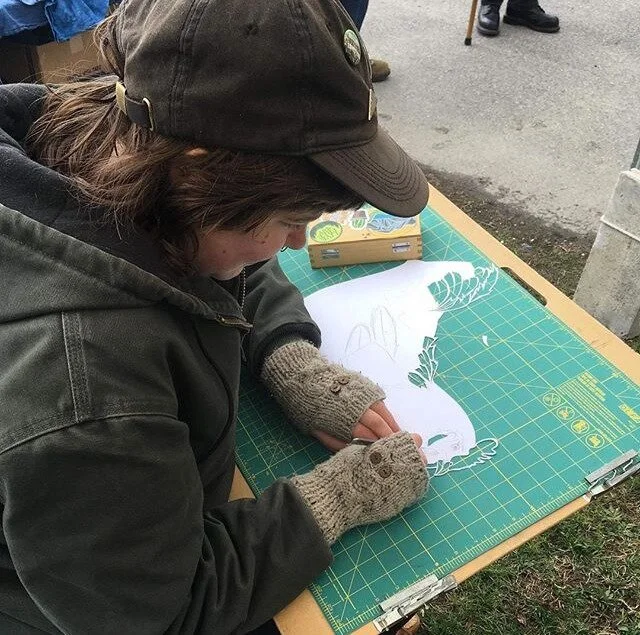
This month we’re spotlighting independent artist Hannah Ellingwood! We love how her work reflects her passion for the natural world, and how that translates into how her creative business operates. She is working hard to make her small business a success and to make a difference in how people see the beauty of our natural resources - check her out!
Arts Spotlight: Terrapin Glassblowing Studio

Conversation Sparkers for Filling the Gaps: The Arts after Sharon Arts 11/13/2019
Monadnock Center for HIstory & Culture in partnership with the Monadnock Ledger Transcript will host a community conversation on 11/13/2019 on the future of the Sharon Arts community. Here are a few conversation sparking essays by Katherine Gekas, Roy Schlieben and Jessica Gelter
Keeping the art community vibrant
Sharon Arts was founded in 1946 in the spirit of artists coming together, sharing, and engaging the larger community with their work. More than studio and gallery space, it was founded to nurture and support a local artist community. Its success and growth as an institution was built by this local community. I would argue it began to fail as it became unmoored from this deep community connection. My experience as Director of MAxT Makerspace has taught me that the facility and tools you have on hand are important, but it is your connection and service to your community that ultimately leads to sustainability.
Our survey of local artists revealed a number of challenges, but one of the most striking was the feeling of isolation and the difficulty artists were having connecting with a larger community. While more than 75% have their own private space and equipment, most also told us they would join an arts center like Sharon Arts. Many also told us their single biggest challenge as an artist was getting integrated in the community, engaging with other artists, and having a voice in town. Just like any industry, collaboration, continual learning and improvement are crucial to the vibrancy of the arts community. And it is crucial to the health of our community at large that the arts remain vibrant.
Sharon Arts used to be that place – it elevated the arts in the lives of so many, from renowned artists to beginners. The opportunity to learn from more established artists, to share skills, get regular critiques and new ideas was part of the secret sauce. We saw in the survey that sharing is something the arts community continues to want to engage in – over 40% of the respondents said they teach or want to teach classes, and 50% wanted to take those classes.
A focus on building on Sharon Art’s legacy of education and community is therefore essential. This is why, while work is done to bring back a new arts facility to our area, we are also working with local artists and instructors to begin filling some of the needs of our arts community right now.
Starting in January, a series of workshops (since we don’t own the name Sharon Arts, lets call them ‘Sharin’ Arts’ for now) will be launched in a number of locations in our region. They will be taught by some of our area’s leading artists in printmaking, ceramics, painting, illustration, and more. The Peterborough Arts Collective is also helping to fill the gap and have already launched a new regular figure drawing program and are exploring programming to support the development of young artists (particularly high-school students). More information about these opportunities will be shared at the community conversation on the 13th and will be listed on the makerspace calendar at www.maxtmakerspace.org.
Roy Schlieben
A community potter’s view on making art together
The Sharon Arts community of potters and ceramicists has been the leading driver of the effort to confront the loss of the Sharon Arts Center, Gallery, and Store. Of the 93 survey participants, 44 are artists that work in ceramics. Some are local, some come from up to 50 miles away. These artists value the resources that were at the Sharon Arts Campus - including the one of a kind Fushigigama wood fire kiln. In fact 28 individuals in this group said they would be willing to pay a monthly membership fee to utilize space and equipment at the old Sharon Arts Center building. Acknowledging this community, their needs, and the special assets that Sharon Arts Center's building brought to this group is a key step forward in understanding how to proceed on our path to "save" the Sharon Arts Center. The space, unique equipment, and community connections made, are vital and valuable, and something the group can work to build a business model around as we move forward.
I moved to the Monadnock region last year and found a home in the Sharon Arts Center pottery studio. I was able to take regular classes there, and as an incredible “transition class,” found myself amongst master potters in a wood firing workshop with international master potters. For someone who is used to community studios, this was several steps above what I’m normally used to!
What I value in working next to other potters is this: I value to the connections I make with others. My work is pushed to a different level, my life is expanded beyond my little space on the planet, my pottery donations help feed people, my pottery sales through the community help subsidize other potters (young and old) who may not otherwise be able to afford pottery.
What I’m starting to perceive as unique with what was the Sharon Arts Center is the pilgrimage to the wood kiln. Although I only participated in one firing, I saw a tight-knit community that spread beyond Monadnock potters. As our survey of local artists trickles in results, there is a strong feeling that the wood kiln, unique for its construction, should be saved. We have not even surveyed the potters who have come far and wide for some of the firings. Because of the wood kiln, NHIA/SAC created a community of artists that reaches far beyond this region.
Finally, I do strongly believe that we need to come up with a sustainable model for moving forward with a shared vision that includes all types of artists: those that aspire to be masters at their work, creating a cohesive body of work to be critiqued and valued, and those that make art because it improves their quality of life in an immeasurable way. Please participate in this discussion.
Katherine Gekas
An art community with little space to show and sell work
The greater Peterborough area hosts an art community known the world over. It is the home of MacDowell Colony, and the region fosters creativity, innovation, experimentation, cultivating and preserving beautiful traditional aesthetics and pushing boundaries of the definition of art.
MAxT Makerspace, Arts Alive! and the team looking into how to rebuild arts community assets after the closing of Sharon Arts. The team conducted a survey and results showed that space to show and sell work was lacking.
There was a clear need for studio and work space for makers who may not align with the space and tools provided at the MAxT Makerspace, there is also a clear need for shared teaching space for community arts educators, but most startlingly, there is a strong desire for a local venue or venues to showcase and sell creative and fine art products made in our region.
80% of Artists who participated in our survey said they don’t show their work locally. And about half of those surveyed said there was not an appropriate venue for their work in town.
Of the two dozen surveyed artists who do feel there are appropriate venues to sell their work, only half of them actually sell their work locally. Why? Five individuals in this group commented on how there was not a strong enough market for their work.
To those of us who know and value the efforts of fine art venues - from community based, to professionally curated, to private collections occasionally made public, to juried artist cooperatives - these survey results a hard pill to swallow. In fact, there are venues in town that show and sell art and fine craft products. However, not everyone feels welcome, catered to, or that there is a market for their work here.
One celebrated artist from the region mentioned one of his biggest challenges was “finding a market for something other than scenes of Mt.Monadnock.”
The Peterborough Arts Collective is doing an incredible job building community and connections for artists of all sorts to each other and to local venues. They are an active part of the town economic development hub and spoke model. I look forward to seeing the town invest in supporting this group to develop effective strategies to dive in to the economic development work needed to support this sector. Securing appropriate retail and gallery space is a key part of this support.
Survey respondents said some of the biggest challenges for their practice were being new to town, isolation and not knowing other artists, and feeling like there is an “elite club” they have to navigate to participate in the arts community. We can address these issues with a space around which community, and connections, could be built. A space where the Arts Collective and other groups can meet regularly.
Of the artists who did not feel there was an appropriate venue for their work in town, six commented that the biggest challenge for their art practice in Peterborough was that there wasn’t a quality gallery that would represent them or show the type of work they do. They also echoed comments about the challenges to find a local market for their work.
There is one last statistic I want to close with. 24% of the artists sell their work in stores and galleries outside of Peterborough - in New Hampshire and beyond. 27% sell at craft fairs. 28% sell online. What would it mean for the local economy if even half of those sales could happen in person in town? What vibrancy that would bring!
Jessica Gelter
